

The EBRD expects Iraq’s economy to contract by 12% in 2026 after the closure of the Strait of Hormuz curbed oil exports. Yet in the first week of October, Baghdad made two moves that matter more to a foreign company than the headline number.
The growth package
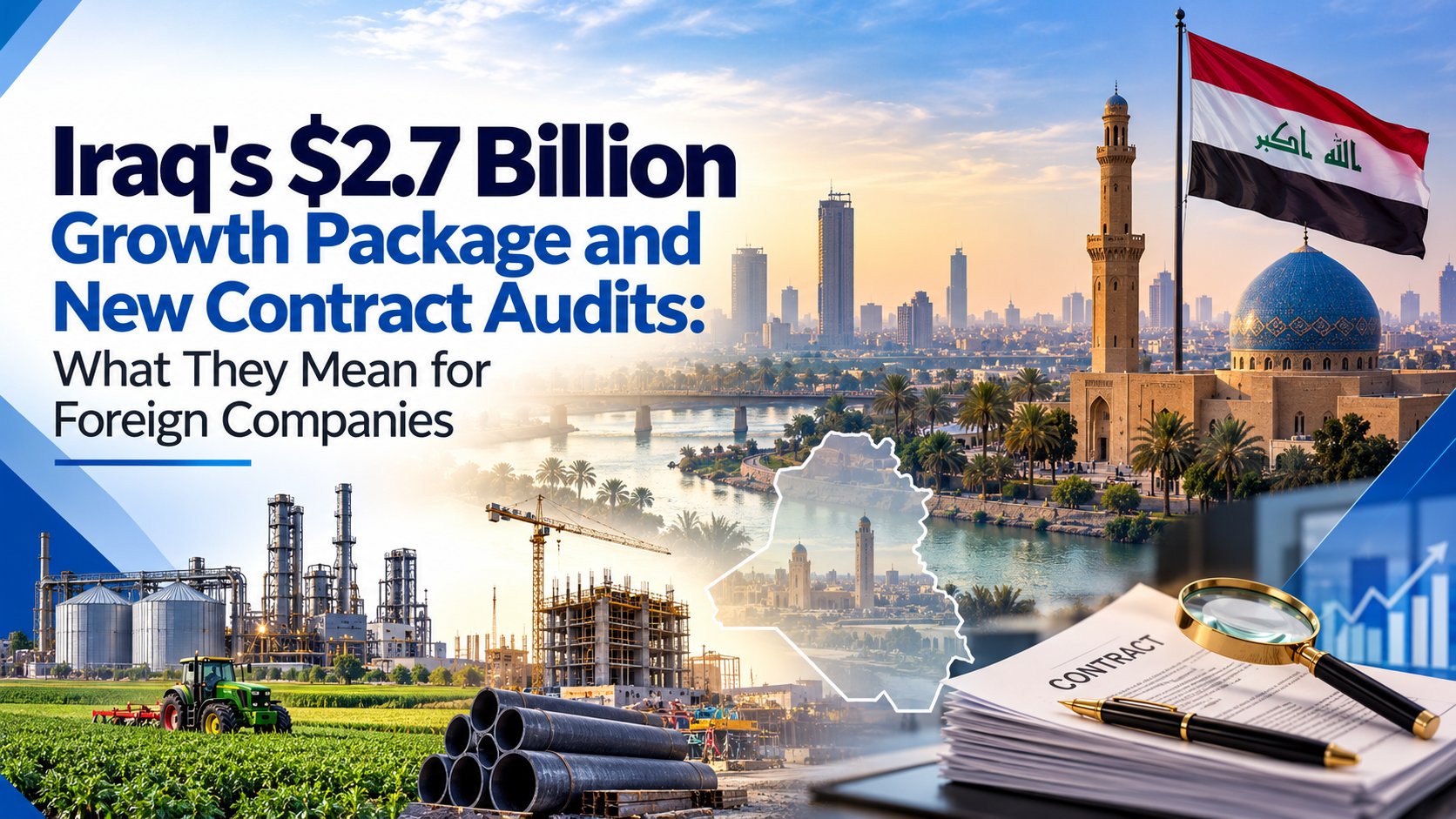
On 5 October, Prime Minister Ali Faleh al-Zaidi announced ID3.5 trillion dinars, about $2.7 billion, focused on agriculture and industrialisation, with housing, construction, tourism and services supported through public-private partnerships. ID1 trillion goes to housing, liquidity for the Trade Bank of Iraq and the Industrial Bank rises by at least ID1 trillion, and the finance ministry has been told to pay ID500 billion each in overdue contractor and farmer dues. Late payment is a common complaint among companies working with Iraqi public bodies, so that last instruction is worth watching.
The EBRD forecasts a 14% rebound in 2027 as oil exports normalise. Companies that enter during the downturn, while competition is thinner and local partners are more open, will be better placed than those who wait for the rebound to appear in the data.
Contracts audited before approval
Iraq’s Federal Board of Supreme Audit will now review state contracts before they are approved, not only after money is spent. Iraq ranked 136th of 182 countries in Transparency International’s latest index, so this speaks directly to the main concern foreign firms raise. The new review raises the compliance bar for weak documentation and opaque local partners, but it can also lower downstream risk for clean bidders, since a contract that has passed audit is less likely to be challenged or frozen later.
Where the openings are
The package points to construction materials, industrial equipment, agri-tech and food processing, and tourism infrastructure. Two cautions apply: disbursement speed will decide how much reaches the market, and Central and South Iraq and the Kurdistan Region still require separate registration decisions.
How Meena helps you prepare
- Market Entry Services covering the full entry process into Iraq, strategy, regulatory guidance, and setup support.
- Market Analysis Services to find which parts of the package fit your sector.
- Business partner search and Meenas Circle to connect you with vetted Iraqi partners who can stand up to pre-approval scrutiny.
- Market due diligence-style groundwork to assess partner, project and payment risk.
- Grants and Funds Consultation for German SMEs looking to offset part of the cost of market entry support.
With operations across the UAE, Saudi Arabia, Qatar, Iraq, Pakistan, and the EU, Meena is positioned to help European companies move on Iraq’s 2027 rebound while the field is still open.
Meena Business Consultancy Services is a cross-border market-entry consultancy headquartered in Ajman Free Zone, UAE, operating across the UAE, Saudi Arabia, Qatar, Iraq, Pakistan, and the EU, with a strategic presence in Germany. Get in touch to discuss your Iraq market entry strategy.